
Feb 6, 2022
Solar Grazing: How Sheep Are Delivering a Triple Win for Farmers, Renewables and the Land
Across the UK, a quiet revolution is underway...and it’s being led by sheep.
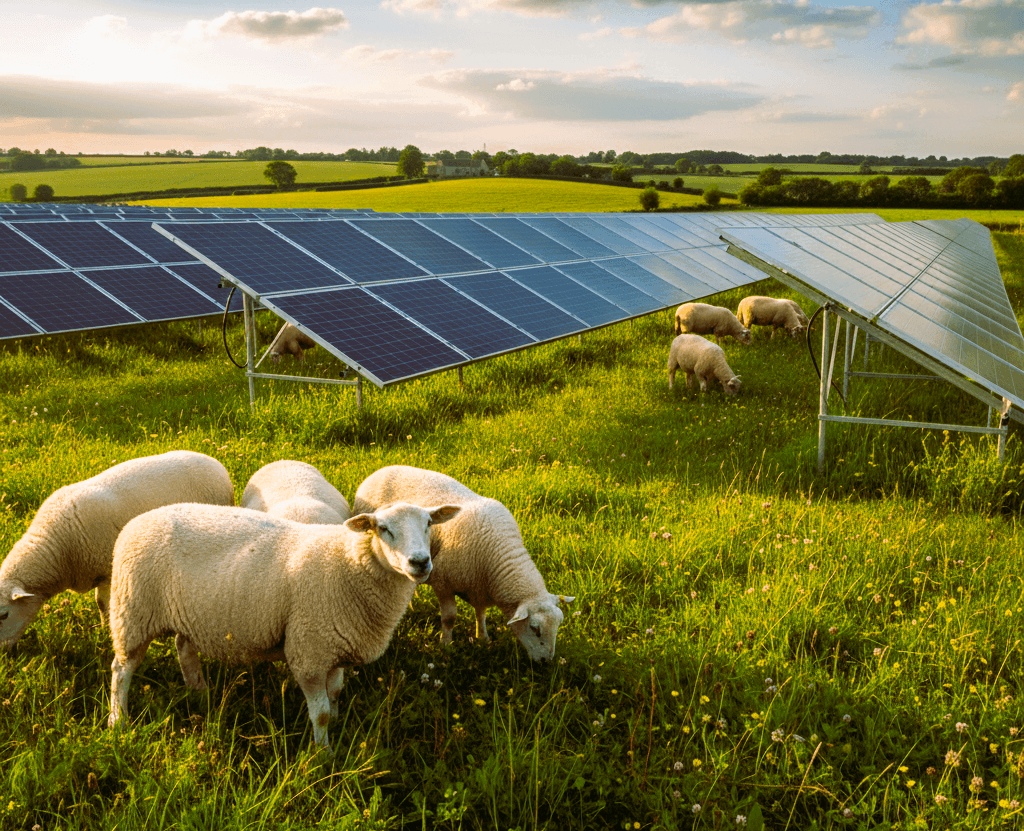
Solar grazing, the practice of using flocks to manage vegetation on solar farm land, is rapidly gaining traction as a genuine triple-win solution. By bringing together agriculture and renewable energy, it’s helping sheep farmers expand, reducing operational costs for solar operators, and improving land stewardship at the same time.
What once sounded novel is now proving to be a practical, scalable model for smarter land use.
A Transformational Opportunity for Farmers
For many sheep farmers, particularly new entrants, access to affordable land is one of the biggest barriers to growth. Solar grazing is changing that equation.
In Lincolnshire, one farmer who began with just 18 acres and 20 sheep has been able to scale her operation dramatically by securing grazing rights on nearby solar land. With access to large, well-fenced sites, she has expanded to hundreds of acres and over 200 sheep, growth that would have been financially out of reach through traditional land acquisition.
Another farmer has tripled her flock through solar grazing agreements and expects her sheep enterprise income to rise substantially as more solar sites come online locally.
For smaller or younger producers, the grass beneath solar panels represents more than forage — it represents opportunity. It removes one of the most significant capital pressures in livestock farming and opens up a pathway for long-term viability.
Smarter Vegetation Management for Solar Sites
Solar farms require consistent vegetation control. If grass grows too long, it can shade panels, reduce output and increase fire risk. Traditionally, maintenance has relied on diesel-powered mowing equipment or chemical treatments, both costly and carbon-intensive.
Sheep offer a low-impact, highly efficient alternative.
They navigate easily between panel rows, work in varying weather conditions, and provide natural fertilisation as they graze. The result is lower maintenance costs, fewer emissions and improved soil health.
In some areas, demand for solar grazing is rising to the point where grazing agreements are becoming increasingly competitive. As solar deployment accelerates, livestock management is becoming a core part of operational strategy rather than an afterthought.
Beyond Maintenance: Biodiversity and Soil Health
Solar grazing can also deliver wider environmental benefits.
Managed correctly, grazing supports a more diverse sward beneath panels, encourages pollinators and reduces the need for herbicides. The presence of livestock helps maintain ecological balance while keeping sites compliant and productive.
This integration of food and energy production demonstrates how dual land use can enhance, rather than displace, rural economies and ecosystems.
Not a Silver Bullet — But a Meaningful Step Forward
Solar grazing isn’t a solution to all agricultural pressures. It doesn’t solve supermarket pricing dynamics, nor does it eliminate wider concerns around land affordability.
There are also practical challenges. Not every solar site is suitable for grazing, and in some cases, grazing proposed during planning stages does not fully materialise. It’s important that grazing commitments are structured clearly and delivered consistently.
However, when implemented thoughtfully, solar grazing shows how renewable energy and agriculture can work side by side, generating clean electricity while supporting livestock production and rural livelihoods.
The Future of Dual Land Use
As the UK continues to expand its renewable energy infrastructure, intelligent land management will become increasingly important.
Solar grazing demonstrates that farmland does not have to be an either-or choice between food production and energy generation. With the right partnerships and planning, it can be both.
At GroundGraze , we see solar grazing as part of a broader shift toward smarter, more integrated land stewardship, where renewable infrastructure enhances agricultural resilience rather than competing with it.
The sheep beneath the panels are doing more than maintaining grass. They are helping redefine how land can serve communities, farmers and the climate at the same time.
#SolarGrazing #Agrivoltaics #DualLandUse #SheepAndSolar #SustainableFarming #RenewableEnergy #GreenEnergyUK #NetZero #EnergyTransition #CleanPower #BritishFarming #UKAgriculture #SheepFarming #FarmDiversification #FutureOfFarming #LandAccess #LandStewardship #Biodiversity #SustainableLandUse #SoilHealth #ClimateSolutions #LowCarbon #RuralEnterprise #InnovationInFarming #SmarterLandUse #GroundGraze #TripleWin #EnergyMeetsAgriculture #SustainableCountryside
Credit: Extracts from reporting in The Guardian, 14 January 2026.